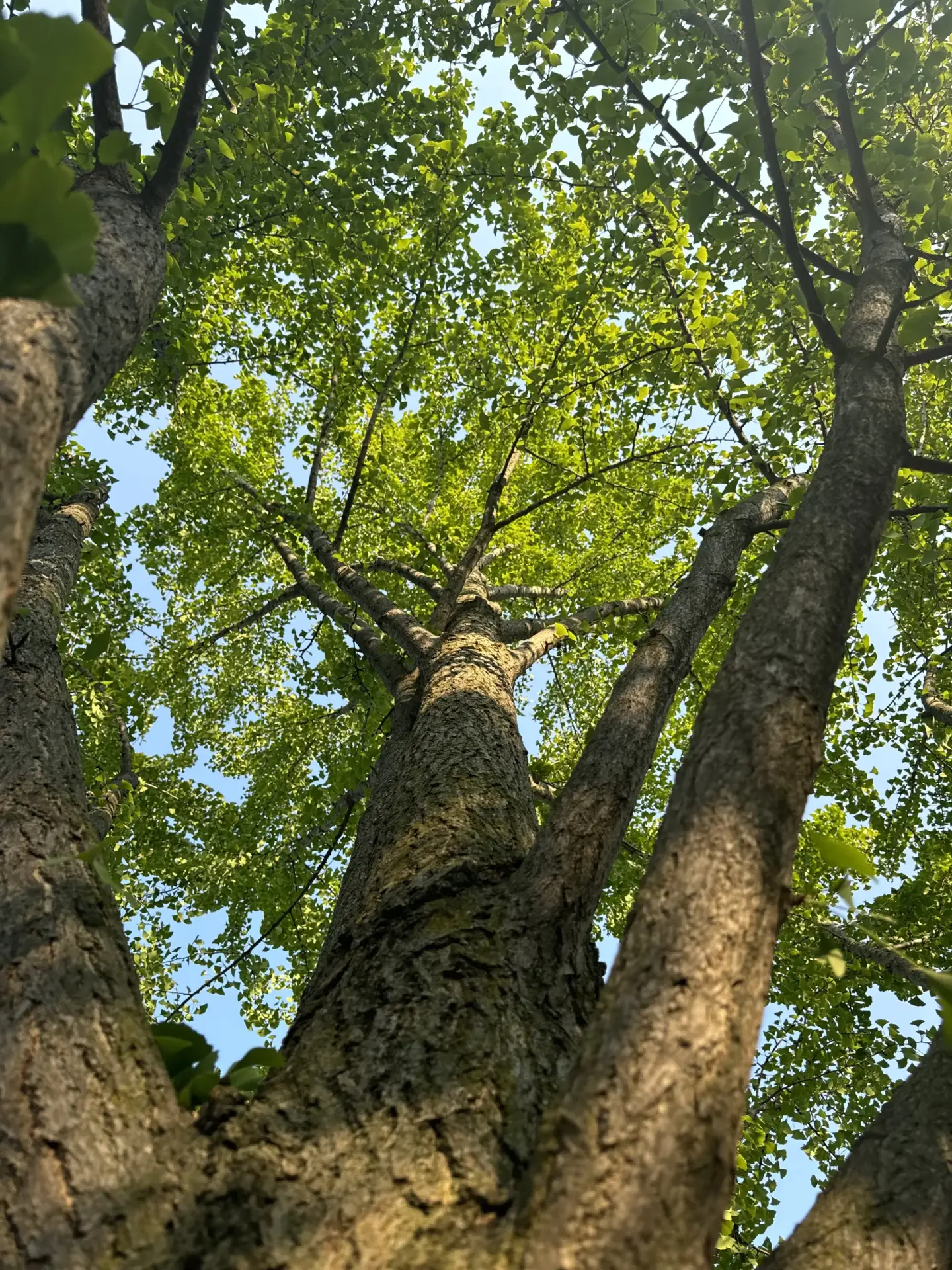
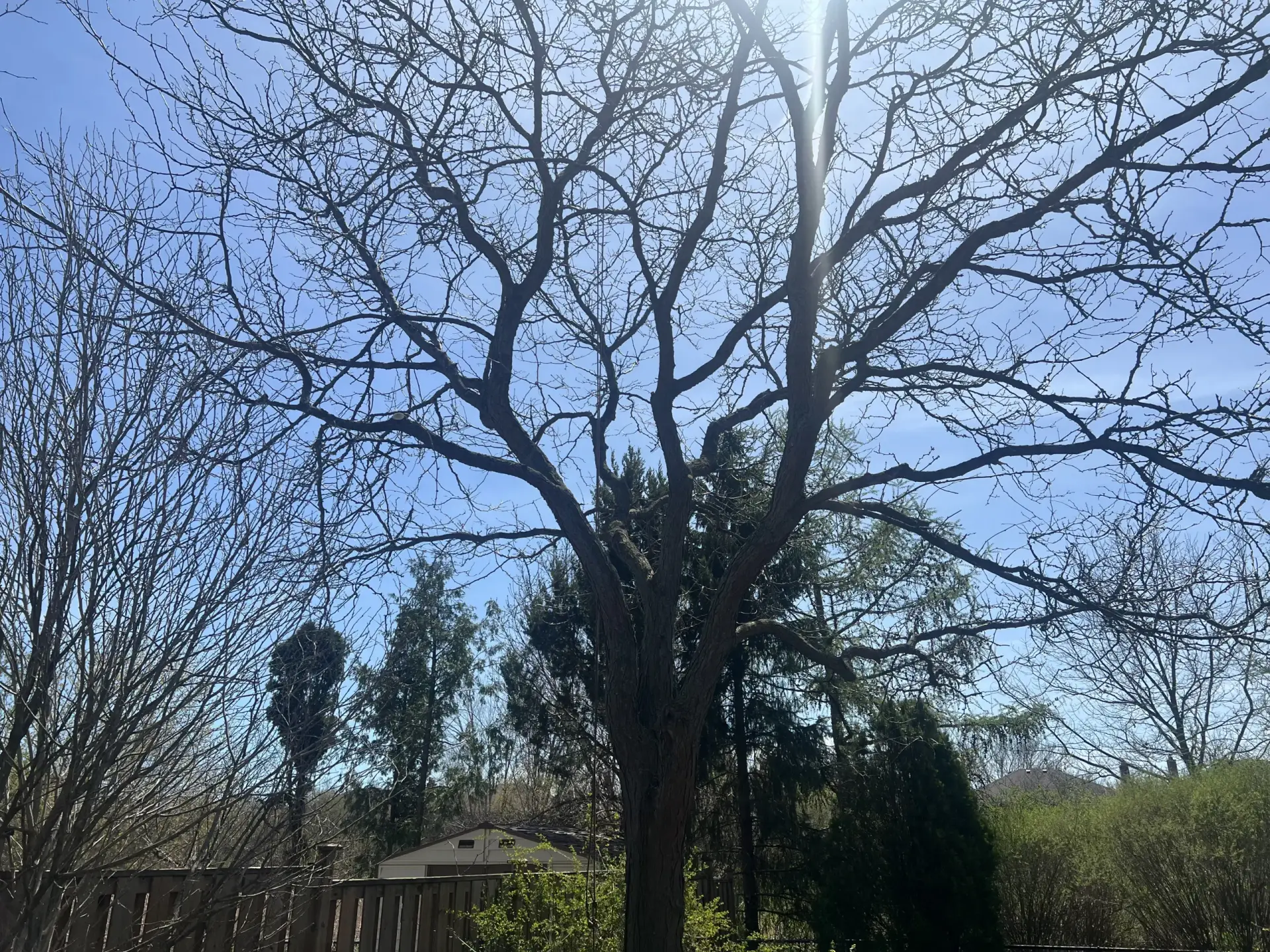
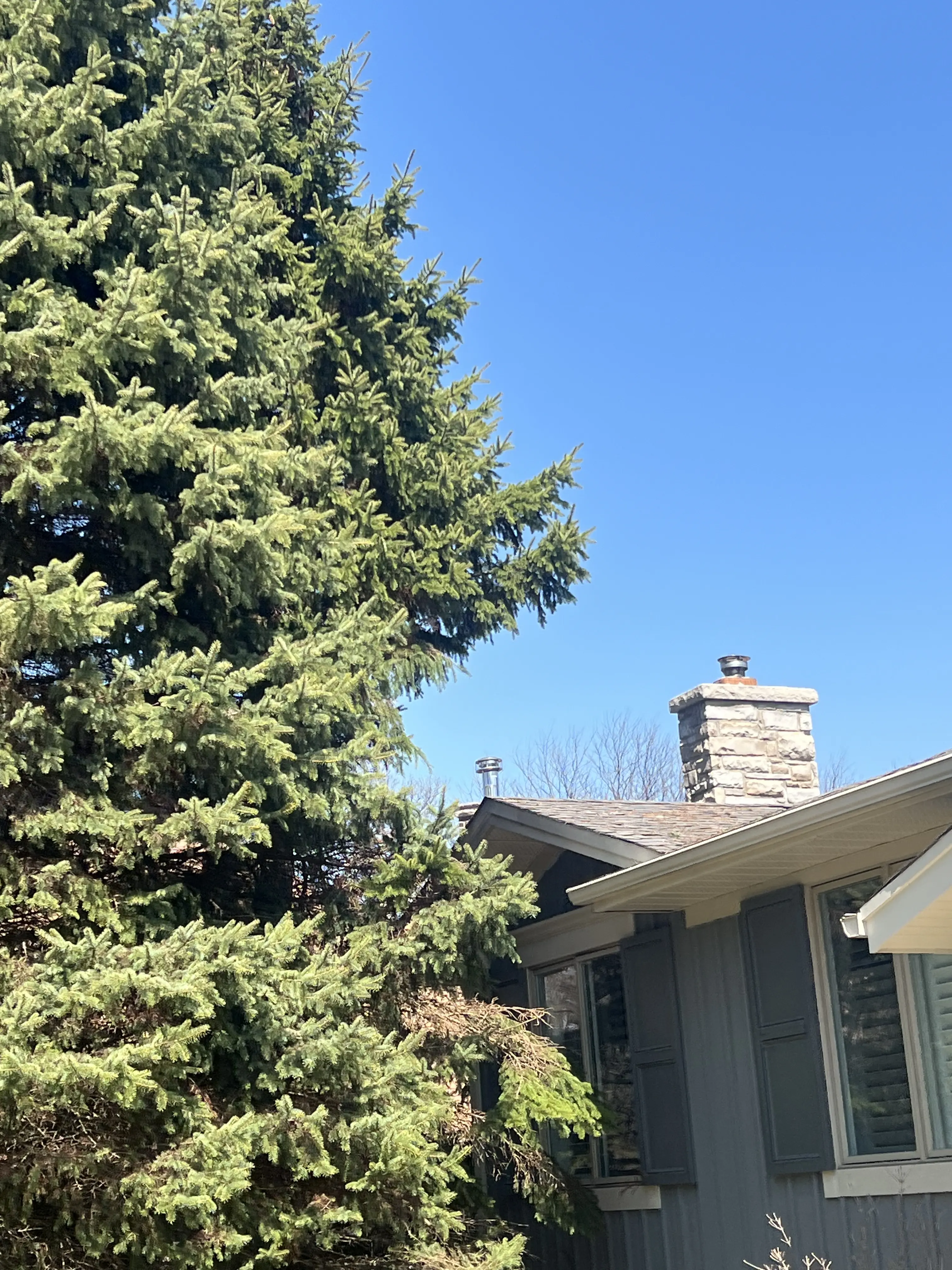
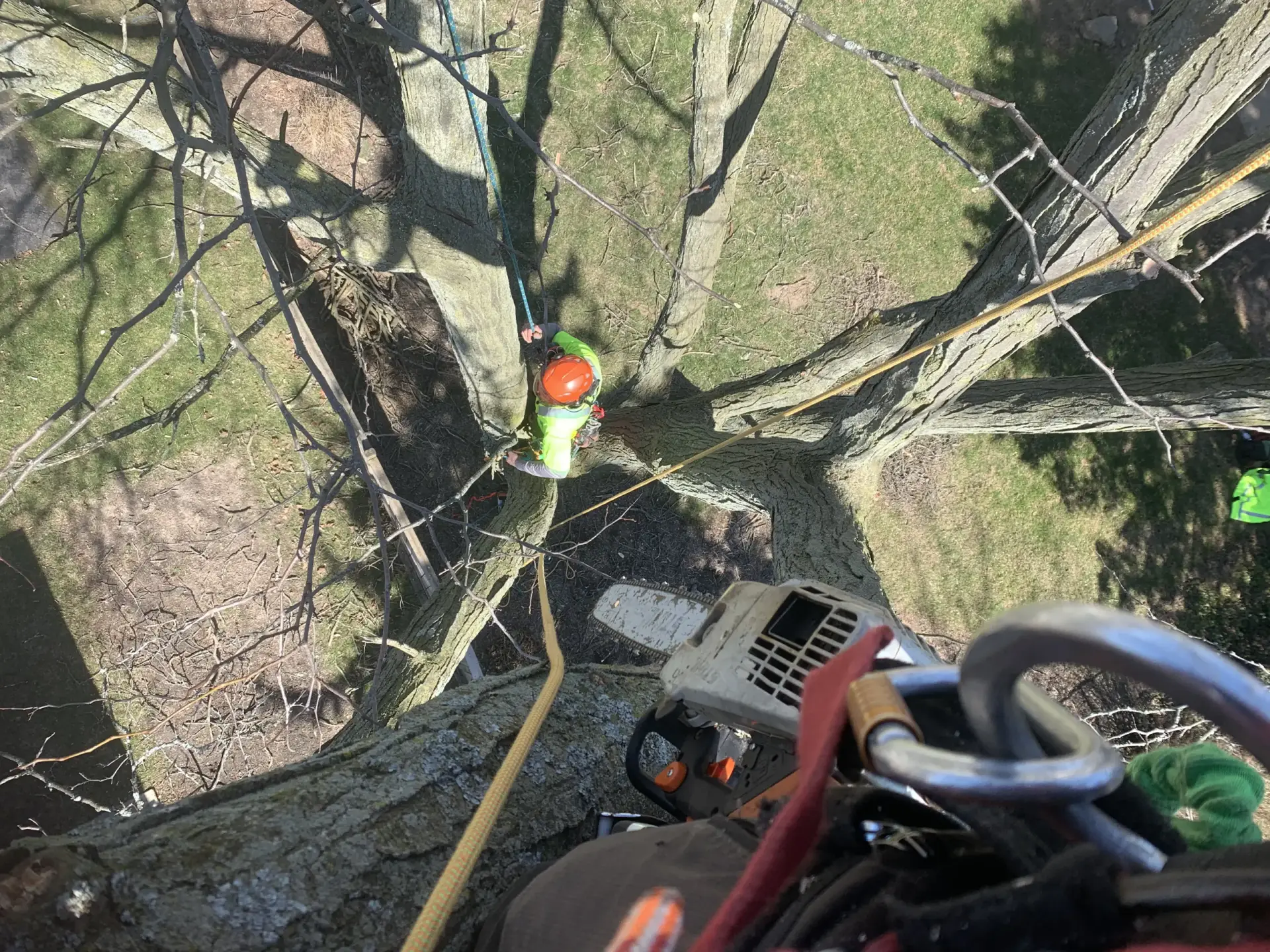
Pruning that guides your tree, not just trims it. Structural work, crown reduction, canopy elevation, and clearance, all done with respect for the tree’s natural form.
Tree pruning is the selective removal of branches to improve a tree's structure, health, and safety. Done properly, it reduces failure risk, improves clearance over your property, and supports long-term canopy development. Done poorly, it stresses the tree and creates future problems.

Dead, broken, or hanging branches.

Call (289) 981-0806 for emergency tree Pruning.
The process is the same regardless of service or tier:

When it comes to tree care, experience and honest advice matter. We take the time to assess each situation, explain the available options, and recommend solutions that prioritize safety, long-term tree health, and your property's needs. Whether we're pruning a mature tree, installing a cabling system, assessing potential hazards, or completing a complex removal, our focus remains the same: professionalism, clear communication, and treating your property with respect from start to finish.
Every tree is different. Every property is different. Lets find the right solution for yours.
Trees don't require pruning because we want them to—they require pruning because our homes, driveways, sidewalks, roads, utility lines, and backyards now exist where forests once did.
In nature, trees are free to grow however they choose. In urban environments, however, they often need guidance to coexist safely with people and property.
Proper pruning can:
Our objective isn't to change how a tree naturally grows. It's to help the tree adapt to its surroundings while preserving as much of its natural structure as possible.
When done properly, pruning should benefit a tree—not harm it.
Every pruning cut creates a wound. Unlike people, trees don't heal damaged tissue—they compartmentalize it. Think of compartmentalization as the tree building natural barriers to slow the spread of decay and protect the healthy wood around the wound.
Generally speaking, the larger the pruning wound, the longer it takes the tree to compartmentalize it. During that time, the exposed wood remains vulnerable to moisture, fungi, and other organisms that can contribute to decay.
That's why one of our primary goals is to make the smallest practical cuts while preserving as much of the tree's original structure as possible.
Sometimes a large limb becomes a concern because of its size or weight. Removing it entirely isn't always the best solution. In many cases, alternatives such as cabling and bracing, selective weight reduction, or structural pruning can reduce the risk while allowing the tree to retain an important part of its natural framework.
Every pruning decision is a balance between risk reduction, tree health, and long-term structure.
Sometimes, yes.
Many trees don't need to be removed—they simply need proper pruning.
Strategic pruning can reduce end weight, improve branch structure, remove hazardous defects, increase clearance from structures, and significantly reduce the likelihood of future failures while preserving the tree.
Not every tree can—or should—be saved. Trees with advanced decay, severe structural defects, root failure, or irreversible decline may ultimately require removal.
If pruning is the right solution, we'll recommend pruning.
If removal is the safer long-term option, we'll explain exactly why.
Our responsibility is to recommend what's best for both your safety and the long-term health of your property.
Properly executed pruning supports tree health. Poor pruning damages it. The difference is in the cuts, the timing, and the amount removed.
It depends on the tree species and the reason for pruning, but for many trees, winter is the ideal time.
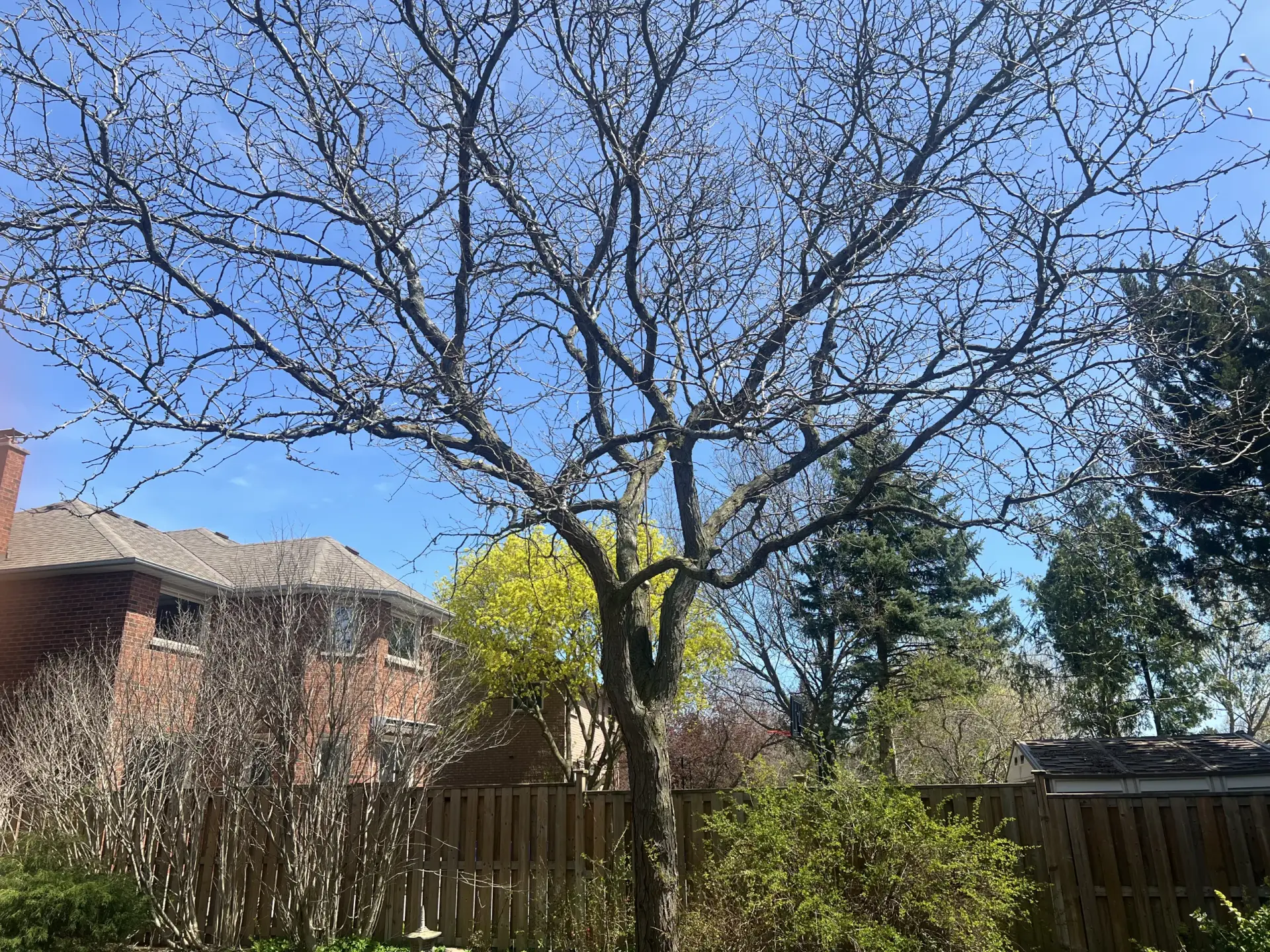
During the dormant season, trees have slowed their growth, making it easier to evaluate their structure while reducing physiological stress. Without leaves, it's also much easier to identify weak branch attachments, crossing limbs, deadwood, and structural defects that may otherwise go unnoticed.
Certain species require additional consideration.
Elm trees should never be pruned while the beetles responsible for spreading Dutch elm disease are active. Fresh pruning wounds can attract these beetles and increase the risk of infection.
Likewise, oak trees should generally not be pruned during periods when oak wilt is a concern, as fresh wounds can provide an entry point for the disease.
That doesn't mean pruning can't be performed during other seasons. Dead, broken, hazardous, or storm-damaged branches often require immediate attention regardless of the time of year.
Winter also happens to be the slowest season for many tree care companies, which often means greater scheduling flexibility and shorter wait times for homeowners.
The best time to prune isn't determined by the calendar—it's determined by the species, the condition of the tree, and the objective of the pruning.
Every tree is different, but as a general guideline, we try not to remove more than one-third of the live canopy during a pruning cycle.
Trees depend on their leaves to produce sugars through photosynthesis. Remove too much live foliage at once, and the tree suddenly has less energy available to:
The same principle applies when reducing individual branches.
Whenever possible, we reduce a branch back to a healthy lateral branch that's at least one-third the diameter of the branch being removed. This allows that lateral branch to naturally assume the role of the new leader.
If the remaining branch is too small, it often can't produce enough energy to support itself. Over time, the tree may determine that branch is no longer viable and begin compartmentalizing and shedding it.
Our goal isn't simply to remove branches.
Our goal is to make pruning cuts the tree can successfully respond to for decades to come.
This is one of the most common questions we hear.
Every pruning cut influences how a tree will grow in the future.
Branches shouldn't simply be shortened wherever it's convenient. Proper pruning considers branch collars, branch unions, growth patterns, future structure, and how the tree will respond years after the work is complete.
A branch reduced improperly today can create decay, weak attachments, excessive sprouting, or structural problems years later.
Good pruning isn't measured by how much wood is removed.
It's measured by how well the tree responds afterward.
No.
Tree topping is considered poor arboricultural practice and isn't a service we offer.
Many homeowners don't realize they're requesting tree topping because they're simply asking for the tree to be "cut down a little."
Unfortunately, topping removes a significant portion of the canopy, creates large wounds, encourages weakly attached regrowth, increases future failure potential, and often shortens the tree's lifespan.
When height reduction is necessary, we use proper reduction pruning techniques that preserve the tree's natural structure whenever possible.
It depends entirely on how the tree is pruned.
When pruning is done properly, the goal is to encourage healthy, balanced growth while maintaining the tree's natural structure.
If a tree's apical dominance (its natural tendency to grow from one main leader) is disrupted through improper reduction cuts, several lateral branches below the pruning point may begin competing to become the new leader. Instead of one strong stem, the tree can develop multiple competing stems with weaker attachments.
Likewise, removing too much of the live canopy—or excessively thinning the canopy and suddenly exposing previously shaded areas to sunlight—can stimulate vigorous epicormic growth (emergency shoots produced to replace lost foliage).
These shoots help restore the tree's ability to produce energy through photosynthesis, but they're often weakly attached and can become future structural problems.
In many cases, too much pruning can be just as harmful as not enough pruning.
Every pruning cut should have a purpose.
Yes.
Improper pruning can have consequences that aren't always visible immediately.
Poor pruning practices can lead to decay, sunscald (think of it as a sunburn for trees), excessive sprouting, weak branch attachments, poor structure, and unnecessary stress. Some of these issues may take years to become noticeable.
Because trees don't heal damaged tissue like people do, every pruning cut influences how the tree responds for the rest of its life. Once wood has been removed, the tree can only compartmentalize the wound—it can't replace what was lost.
Some pruning mistakes can be improved over time.
Others may permanently affect the tree's health, structure, and longevity.
That's why thoughtful pruning matters.
Usually not.
Branches touching a roof, gutters, siding, windows, or even solar panels don't automatically mean the tree needs to be removed.
Many clearance issues can be resolved through selective pruning while preserving the tree.
During our assessment, we'll determine whether simple clearance pruning is appropriate, whether structural pruning would provide a better long-term solution, or whether the tree presents a larger concern that should be addressed differently.
Removal is never our first recommendation simply because a branch is touching a structure.
That depends on the species, age, condition, location, and your long-term goals.
Young trees often benefit from structural pruning every few years to establish strong branch architecture early in life.
Mature trees generally require less frequent maintenance and are commonly pruned every three to seven years, depending on their health and growing environment.
Many homeowners wait until a tree becomes a problem.
In reality, routine pruning is usually less expensive, less stressful for the tree, and more effective than waiting until corrective work becomes necessary.
Rather than recommending a fixed schedule, we recommend pruning based on the individual needs of each tree.
Absolutely not.
Every species grows differently, responds differently to pruning, and develops its own structural characteristics.
A mature silver maple shouldn't be pruned the same way as a young sugar maple. Likewise, a spruce, an oak, and a honey locust each require a completely different approach.
Every pruning plan is developed around the individual tree—not a one-size-fits-all formula.
The best pruning decisions come from understanding how that particular tree grows, not from applying the same technique to every species.
No pressure. No upselling. We’ll come look at your tree properly and give you a clear written quote within 48 hours.